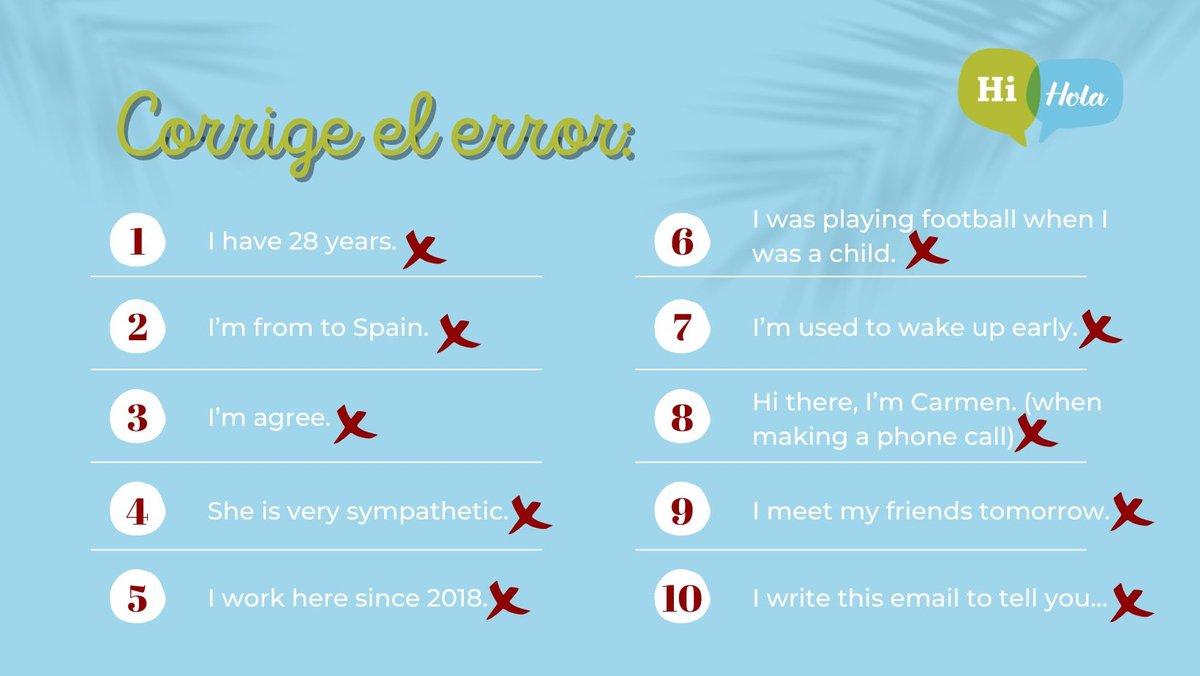
Mastering a new language, especially one as rich and nuanced as Spanish, is an exhilarating journey. But let's be honest: even for seasoned speakers, the path is riddled with tricky turns and unexpected pitfalls. From a misplaced accent mark to a subtly misused verb, common linguistic missteps can cloud your message and chip away at your confidence. This guide dives deep into the heart of Resolución de Dudas Frecuentes y Errores Comunes—the frequent doubts and common mistakes that trip up learners and native speakers alike—and offers clear, actionable solutions to help you communicate with precision and flair.
Think of this as your personal compass for navigating the beautiful, occasionally bewildering, landscape of the Spanish language. We're here to demystify those "aha!" moments, turning your linguistic frustrations into triumphs.
At a Glance: Navigating Spanish's Tricky Waters
- Grammar Gaffes: Watch out for common mix-ups like "ser" vs. "estar," "por" vs. "para," and ensuring subject-verb agreement.
- Spelling Snafus: Accents are crucial! Don't forget proper punctuation and capitalization rules.
- Writing Woes: Aim for clarity and conciseness. Redundancy and convoluted sentences are your enemies.
- Quick Confusions: Many words and phrases have subtle differences or valid alternatives. Knowing them boosts confidence.
- Your Best Defense: Regular reading, active listening, consistent practice, and embracing feedback are your superpowers.
The Linguistic Labyrinth: Why We Stumble
It’s tempting to think that once you've learned the basics, the rest is smooth sailing. Not quite. According to Vamos Spanish, over 80% of Spanish speakers make daily errors in grammar, spelling, and writing. This isn't a sign of failure; it's a testament to the language's complexity and the dynamic nature of communication. These aren't just minor slips; they can significantly impact clarity, leading to misunderstandings or making your message less effective.
The good news? Most common errors fall into predictable categories, which means they can be systematically identified and corrected. By understanding why these mistakes happen, you can develop targeted strategies to avoid them.
Untangling Grammatical Knots: Precision is Power
Grammar forms the backbone of any language, and Spanish is no exception. While its structure offers elegance, it also presents distinct challenges, often where English speakers or even native Spanish speakers expect direct equivalences that don't quite exist.
Capitalization: More Than Just the Start of a Sentence
A frequent grammatical misstep involves the inconsistent use of uppercase and lowercase letters. In Spanish, capitalization rules differ from English in several key ways:
- Proper Nouns & Sentence Beginnings: Just like in English, proper nouns (names of people, places, specific events) and the start of a new sentence always get a capital letter. Example: "Madrid es la capital de España."
- Common Nouns & Adjectives: This is where it diverges. Days of the week, months, languages, nationalities, and religions are not capitalized in Spanish. Example: "El lunes aprendí español con un profesor francés." (Monday, Spanish, French are all lowercase).
Your Strategy: Internalize the core rule: capitalize less in Spanish than you would in English. When in doubt, default to lowercase for general categories.
The "Ser" and "Estar" Tango: Being or Being?
Ah, the infamous "ser" and "estar." Both translate to "to be," but their usage is profoundly different, dictating states of permanence versus temporary conditions.
- Ser (to be - permanent/essential): Used for inherent qualities, identity, origin, profession, time, and permanent locations.
- Example: "Soy periodista." (I am a journalist - profession)
- Example: "Ella es alta." (She is tall - inherent quality)
- Estar (to be - temporary/location): Used for temporary states, emotions, health, physical location (even permanent ones!), and conditions resulting from an action.
- Example: "Estoy cansado." (I am tired - temporary state)
- Example: "El libro está en la mesa." (The book is on the table - location)
Your Strategy: Think of "Ser" as what something fundamentally is and "Estar" as how something is right now or where it is. Practice with minimal pairs and pay close attention to context.
"Por" vs. "Para": Navigating Purpose and Cause
These two prepositions both mean "for" or "by," but their subtle distinctions are critical for conveying precise meaning.
- Por (reason, cause, duration, means, movement through, exchange): Think "because of," "through," "for a duration of time," "by means of."
- Example: "Lo hice por ti." (I did it for you - on your behalf/because of you)
- Example: "Viajamos por la ciudad." (We traveled through the city - movement)
- Example: "Trabajó por ocho horas." (He worked for eight hours - duration)
- Para (purpose, destination, recipient, deadline, opinion): Think "in order to," "towards," "for (someone/something)," "by (a certain time)."
- Example: "Estudio para aprender." (I study to learn - purpose)
- Example: "Este regalo es para Juan." (This gift is for Juan - recipient)
- Example: "La tarea es para mañana." (The homework is for tomorrow - deadline)
Your Strategy: "Para" often points forward—towards a goal, recipient, or future time. "Por" often looks backward or through—indicating a cause, a duration, or a path.
Sentence Construction: Building Blocks of Clarity
Beyond individual words, the way you assemble your sentences dictates their clarity and impact. Common issues include incorrect verb conjugation, misplaced adjectives, and subject-verb agreement.
- Verb Conjugation: Spanish verbs change dramatically based on who is performing the action and when. Mismatched tenses or persons are glaring errors.
- Correction: "Yo hablo" (I speak) not "Yo hablas."
- Adjective Placement: Unlike English, Spanish adjectives typically follow the noun they describe.
- Correction: "La casa blanca" (The white house) not "La blanca casa" (unless for poetic emphasis).
- Subject-Verb Agreement: The verb must always match its subject in number and person.
- Correction: "Los estudiantes leen" (The students read) not "Los estudiantes lee."
Your Strategy: Focus on mastering regular conjugations first, then tackle irregulars gradually. Always double-check that your verb matches its subject before anything else. Reading widely helps you internalize natural word order.
Pro-Tip: Constant practice and seeking feedback from native speakers or teachers are indispensable. They can pinpoint nuances you might miss and guide you toward more natural expression.
Conquering Spelling Snafus: The Devil's in the Details
Good spelling isn't just about correctness; it's about respect for your reader and ensuring your message is understood without friction. Spanish spelling, particularly accentuation and punctuation, can be a minefield.
The Power of the Tilde: Missing Accents Change Everything
Accents (tildes) in Spanish are not optional decorative marks; they are crucial for pronunciation and meaning. A word's meaning can change entirely with or without an accent.
- Example: "sí" (yes) vs. "si" (if)
- Example: "él" (he) vs. "el" (the)
- Example: "papá" (dad) vs. "papa" (potato/pope)
Spanish accentuation rules, while initially intimidating, are highly logical. Words are classified as agudas, graves (or llanas), esdrújulas, and sobresdrújulas based on where their stressed syllable falls, and specific rules dictate when an accent mark is used.
Your Strategy: Dedicate time to learning the accentuation rules.
- Agudas: Stress on the last syllable. Accent if ends in N, S, or vowel. (e.g., canción, comerá)
- Graves/Llanas: Stress on the second-to-last syllable. Accent if doesn't end in N, S, or vowel. (e.g., árbol, fácil)
- Esdrújulas/Sobresdrújulas: Stress on the third-to-last or earlier syllable. Always carry an accent. (e.g., médico, rápidamente)
Punctuation's Purpose: Guiding the Reader
Incorrect punctuation can create confusion or completely alter the tone of your writing. Spanish uses most of the same punctuation marks as English, but with some key differences:
- Question and Exclamation Marks: Spanish requires inverted question marks (¿) and exclamation marks (¡) at the beginning of interrogative and exclamatory sentences, in addition to the regular ones at the end.
- Example: "¿Cómo estás?" and "¡Qué hermoso día!"
- Commas, Periods, Semicolons: Generally used similarly to English for pauses, sentence breaks, and separating clauses.
- Ellipsis (...): In Spanish, if an ellipsis closes a sentence, the next sentence begins with a capital letter. If it merely indicates a pause or omitted words within a sentence, the following word is lowercase.
- Example: "Pensé en ello... No estoy seguro." vs. "Quería decir... pero no lo hice."
Your Strategy: Practice writing exercises specifically focused on accentuation and punctuation. Read Spanish texts aloud, paying attention to how punctuation guides your intonation. Consulting a dictionary for words with variable stress can also be immensely helpful.
Polishing Your Prose: Overcoming Writing Weaknesses
Beyond grammar and spelling, effective writing hinges on clarity, conciseness, and coherence. Many struggle with these elements, even in their native tongue.
The Pitfalls of Poor Structure and Redundancy
Common writing errors include a lack of clear sentence structure, excessive redundancy, and a general lack of conciseness. These issues make your text difficult to read and your message hard to grasp.
- Lack of Structure: Sentences that sprawl without a clear subject, verb, or logical flow.
- Redundancy: Repeating ideas or using unnecessary words that add no value. Example: "Subir arriba" (to go up, up) – "subir" already implies "up."
- Lack of Conciseness: Taking many words to say what could be expressed in a few.
Your Strategy:
- Concise Sentences: Break down long, complex sentences into shorter, punchier ones. Each sentence should ideally convey one main idea.
- Eliminate Redundancy: Review your writing specifically to cut out superfluous words or phrases. Ask yourself, "Does this word genuinely add new meaning?"
- Coherence and Connectors: Use appropriate connectors and discourse markers (e.g., sin embargo (however), además (furthermore), por lo tanto (therefore)) to link ideas smoothly between sentences and paragraphs. This creates a logical flow that guides the reader.
- Clear Structure: Ensure each paragraph has a main idea, introduced early, and supported by subsequent sentences. Ideas should progress logically within and between paragraphs.
Adapting to Audience and Context
Effective writing also means understanding your audience and adapting your tone, style, and structure accordingly. A formal report demands a different approach than a casual email to a friend.
Your Strategy: Before you write, consider:
- Who is your reader? (Formal or informal relationship?)
- What is the purpose of your text? (Inform, persuade, entertain?)
- What is the desired tone? (Serious, lighthearted, urgent?)
Seeking feedback from professionals or experienced Spanish writers can provide invaluable insights into improving your written communication. They can offer an objective perspective on clarity, style, and impact.
Quick Confusions Resolved: Your Instant Reference Guide
Even fluent speakers encounter moments of hesitation. The Royal Spanish Academy (RAE) provides clear answers to many common "dudas rápidas" (quick doubts). Here are some to keep in your linguistic toolkit:
- arco iris / arcoíris: Both spellings are correct. Arcoíris is preferred in modern usage.
- a gusto / agusto: "A gusto" (meaning 'at ease,' 'with pleasure') is the correct form.
- guardiacivil / guardia civil: Both spellings are valid. Guardia civil (two words) is more common.
- procrastinar / procastinar: "Procrastinar" is the correct form, meaning to delay or postpone.
- resiliencia / resilencia: "Resiliencia" (resilience) is the correct form.
- quiosco / kiosco: "Quiosco" is preferred, but "kiosco" is also valid due to common usage.
- va a haber jaleo / va haber jaleo: "Va a haber jaleo" (there's going to be trouble/a commotion) is correct, as "a" is needed before the infinitive.
- el mar Mediterráneo / el Mar Mediterráneo: "El mar Mediterráneo" is correct. Common nouns (like "mar") are lowercase unless part of a proper name or at the beginning of a sentence.
- buen día / buenos días: "Buenos días" is the standard general greeting. "Buen día" is used in some Latin American regions, but "buenos días" is universally understood and safer.
- estado / Estado: Context is key. "Estado" with a capital 'E' refers to a sovereign nation or the State as a political entity. "estado" with a lowercase 'e' refers to a condition, state of being, or a specific region within a country (e.g., "el estado de California").
- carné / carnet: Both options are valid for "ID card" or "license." Carné is the Spanish adaptation.
- Abreviatura de "redes sociales": "RR. SS." is the most appropriate abbreviation.
- Te comparto el archivo / Comparto contigo el archivo: Both options are considered valid for "I'm sharing the file with you." The first is more common in casual digital communication.
- friegasuelos / fregasuelos: "Friegasuelos" (floor cleaner) is the correct form.
- Mayúscula tras puntos suspensivos: Only if the ellipsis closes the sentence. If the sentence continues after the ellipsis, the next word starts with a lowercase letter.
- en serio / enserio: "En serio" (meaning 'seriously, without joking') is the correct expression. "Enserio" is not a recognized word.
- ella y yo / yo y ella: "Ella y yo" is generally considered more courteous and grammatically standard, placing the other person first, but "yo y ella" is also heard and understood, though less formal.
- Tilde en "bíceps": Yes, it is tilded. "Bíceps" is a "palabra llana" (paroxytone word, stressed on the second-to-last syllable) ending in 's' but preceded by another consonant ('p'), so it breaks the general rule and requires an accent. This is a common exception.
- díganos / dígannos: Both options can be valid depending on the context. "Díganos" is the formal command "tell us." "Dígannos" is rarely used and often incorrect unless it's a specific, highly regional or archaic construction; generally stick to "díganos."
- República Checa / Chequia: "República Checa" is the official name. "Chequia" is also valid and commonly used as a shorter, informal name for the country.
Understanding these specific points can save you from common errors and streamline your communication. For more detailed explorations on crafting perfect Spanish sentences, you might find valuable insights in a guide on How to write it.
Your Blueprint for Ongoing Improvement: General Strategies
Avoiding common mistakes and resolving doubts isn't a one-time fix; it's an ongoing process of learning and refinement. Here are universal strategies that will accelerate your progress and solidify your understanding:
1. Immerse Yourself: Read and Listen Regularly
The most effective way to internalize correct sentence structure, expand your vocabulary, and grasp grammatical nuances is through consistent exposure.
- Read: Dive into Spanish books, newspapers, magazines, and reputable online articles. Pay attention to how native speakers construct sentences, use punctuation, and employ vocabulary. Start with topics you enjoy to keep engagement high.
- Listen: Tune into Spanish radio, podcasts, music, and TV shows. Actively listen to conversations, noting pronunciation, intonation, and common phrases. This helps you develop an ear for what sounds "right."
2. Speak with Confidence: Pay Attention to Pronunciation and Intonation
While grammar and spelling focus on the written word, pronunciation and intonation are vital for clear and fluent spoken communication. Mispronounced words can lead to misunderstandings, and flat intonation can make you sound less natural.
- Practice: Mimic native speakers. Use pronunciation guides or apps. Record yourself and compare it to a native speaker's delivery.
- Intonation: Pay attention to the rise and fall of speech. Spanish often has a different melodic quality than English. Correct accentuation in writing often corresponds to where the stress falls in speech.
3. Build a Strong Foundation: Study and Practice Grammatical and Spelling Rules
While immersion is powerful, targeted study of rules is non-negotiable. It provides the framework for understanding why things are structured the way they are.
- Dedicate Time: Set aside specific time for grammar drills and spelling exercises. Focus on one rule at a time until you feel comfortable.
- Flashcards and Apps: Utilize tools that make learning rules interactive and repetitive, especially for tricky conjugations or accentuation patterns.
4. Empower Yourself: Use Reliable Resources
Don't guess when you can know. Reputable resources are your best friends in moments of doubt.
- Dictionaries: Always have a good Spanish dictionary (like the RAE's online dictionary) at hand for vocabulary, definitions, conjugations, and gender.
- Grammar Books: Invest in a comprehensive Spanish grammar guide that explains rules clearly and provides examples.
- Online Tools: Language learning apps and websites often have excellent reference sections.
5. Embrace Growth: Receive Feedback Gracefully
Feedback is a gift. It highlights blind spots and offers pathways to improvement that you might not discover on your own.
- Native Speakers/Teachers: Ask them to review your writing, listen to your pronunciation, and correct your mistakes. Don't be shy about asking "why" to understand the underlying rule.
- Language Exchange Partners: Practice speaking and writing with others who are also learning or who are native speakers looking to learn your language. This creates a supportive environment for mutual growth.
Moving Forward with Fluency and Finesse
Navigating Resolución de Dudas Frecuentes y Errores Comunes in Spanish isn't just about avoiding mistakes; it's about building confidence and expressing yourself with the clarity and nuance you intend. Every grammatical knot untangled, every accent mark placed correctly, and every quick doubt resolved contributes to a richer, more effective command of the language.
Remember, language learning is a marathon, not a sprint. There will always be new phrases to learn, new nuances to grasp, and new ways to express yourself more eloquently. Embrace the journey, be patient with yourself, and commit to consistent practice. By actively engaging with these strategies, you'll not only minimize errors but also cultivate a deeper appreciation for the beauty and precision of the Spanish language. Your voice, in all its articulate glory, awaits.