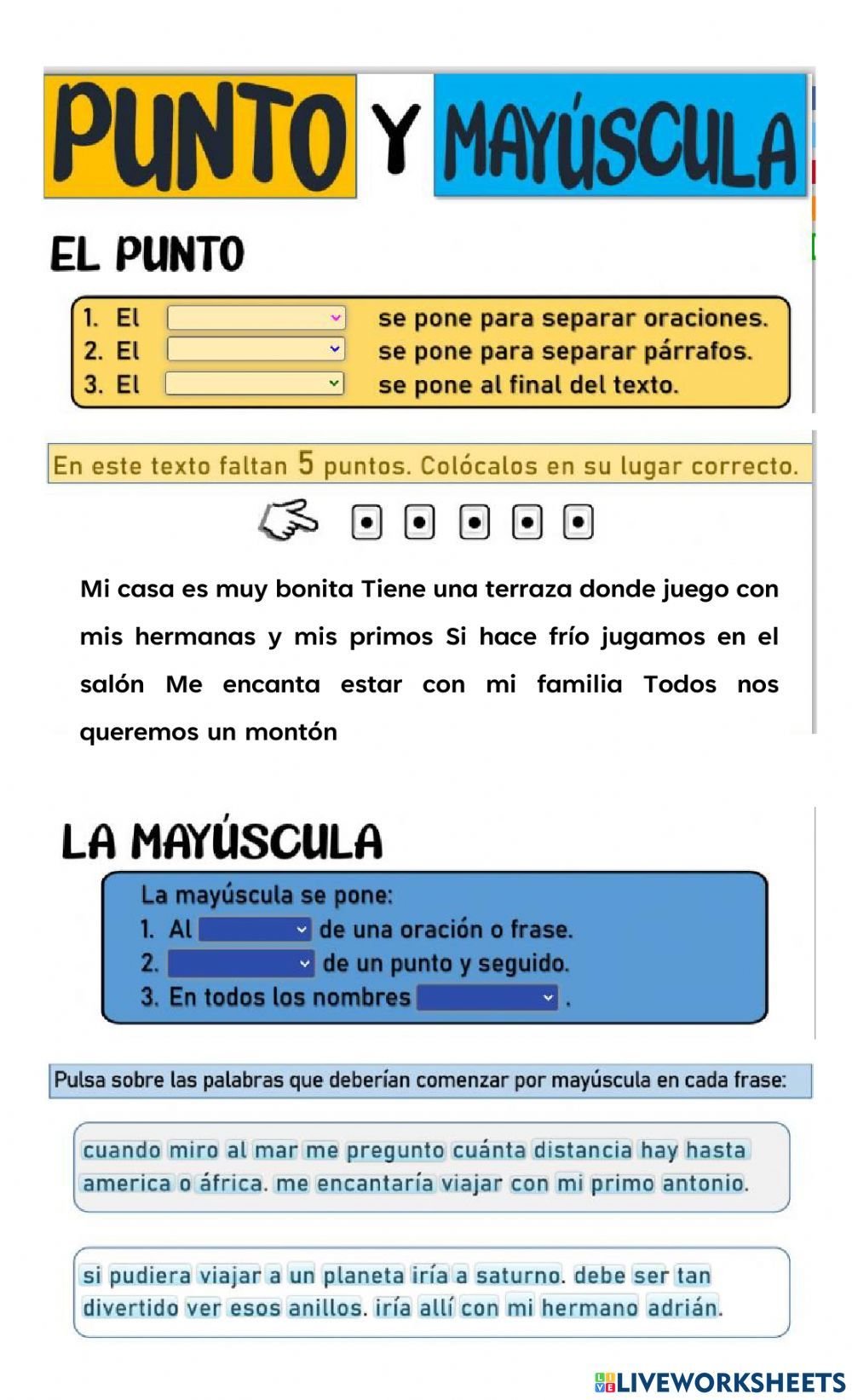
When you write in Spanish, the difference between a crisp, professional text and one that's a bit… off often boils down to mastering the subtle dance of Puntuación y Mayúsculas (punctuation and capitalization). These aren't just arbitrary rules; they're the silent architects of clarity, guiding your reader through your thoughts with precision and grace. Think of them as the traffic lights and road signs of language, ensuring your message flows smoothly and arrives exactly where it's intended. Without them, even the most brilliant ideas can devolve into a confusing jumble.
Getting these details right isn't about rigid adherence to dusty grammar books; it's about respecting your reader and showcasing your command of the language. This guide will help you navigate the nuances of Spanish punctuation and capitalization, transforming your writing from merely comprehensible to truly impeccable.
At a Glance: Key Takeaways for Puntuación y Mayúsculas
- Sentences Start Strong: Always capitalize the first word of a sentence.
- Periods Demand Caps: After a period (
.), always start the next word with a capital letter, unless you're dealing with a leading numeral. - Question/Exclamation Marks: Capitalize the word after a closing
¿?or¡!if it ends a statement. The word inside these marks only capitalizes if it begins the question/exclamation. - Colons Have Rules: Lowercase after a colon most times, but capitalize for direct quotes, formal salutations, or when introducing a list of full sentences.
- Commas & Semicolons: Always lowercase after a comma (
,) or semicolon (;). - All Caps Warning: Avoid writing entire texts in capital letters online; it's seen as shouting. Reserve it for specific contexts like headlines or legal documents.
- Proper Nouns Reign: Names of unique entities (people, places, specific events, organizations) are capitalized.
- Common Nouns Stay Humble: General categories (days of the week, months, languages, professions) are typically lowercase.
- Titles Vary: Books, films, and legal documents have specific capitalization rules, often involving italics or quotes. Religious texts have their own pattern.
- Shortcuts Follow Suit: Abbreviations, acronyms, and symbols largely maintain the capitalization of their original words, with some unique exceptions.
The Bedrock of Spanish Punctuation: Mastering the Period (Punto)
The period (.) is arguably the most fundamental punctuation mark. It signals the end of a complete thought, and its presence dictates a crucial capitalization rule that applies almost universally.
When a Period Calls for a Capital Letter
Every time a sentence concludes with a period, the word that immediately follows—signaling the start of a new sentence—must begin with a capital letter. This creates a clear break between ideas and helps your reader process information bite by bite.
- Example: El día era soleado. La temperatura era perfecta. (The day was sunny. The temperature was perfect.)
There’s a small, specific exception to this rule: - Exception: If your sentence or text begins with a numeral, the word immediately following that numeral (even if it's after a perceived sentence start) is written in lowercase. This prevents awkward capitalization where numbers lead the content.
- Example: 1080 recetas de cocina es un libro muy popular. (1080 recipes of cuisine is a very popular book.)
Beyond the Period: Question Marks, Exclamation Points, and Ellipses
While periods define the end of a statement, question marks, exclamation points, and ellipses introduce their own set of rules, particularly regarding capitalization after their closing forms.
Capitalizing After Question and Exclamation Marks
If a closing question mark (?) or exclamation mark (!) concludes a statement, the very next word will begin with a capital letter. It functions much like a period in this regard, signaling a new independent thought.
- Example: ¿Llegaste a tiempo? Sí, justo a la hora. (Did you arrive on time? Yes, right on time.)
- Example: ¡Qué emoción! Mañana es la gran final. (How exciting! Tomorrow is the grand final.)
Navigating Ellipses (...)
Ellipses indicate an omission or a pause, and how you capitalize after them depends on whether the statement is complete or ongoing.
- Closing a Statement: If the ellipses conclude a full statement, the word that follows them starts with a capital letter.
- Example: Ella dijo: «... y los sueños, sueños son». La frase resonó en el aire. (She said: "... and dreams, they are dreams." The phrase echoed in the air.)
- Open-Ended Statement: If the ellipses indicate that a statement is unfinished or continues, the word immediately following them starts with a lowercase letter. This shows a continuation of the same idea.
- Example: No sé qué pensar... veremos qué pasa. (I don't know what to think... we'll see what happens.)
Capitalization Within and Around Other Punctuation
Spanish punctuation can sometimes nest within itself. Here’s how capitalization works in those scenarios:
- After Closing Parentheses, Brackets, or Quotes: Even if a question mark, exclamation mark, or an abbreviation-period precedes a closing parenthesis
), bracket], or quotation mark”, the word following that closing punctuation will remain in lowercase. This is because the punctuation inside is part of the enclosed text, not the main sentence’s conclusion. - Example: Le pregunté (¿vas a venir?), pero no respondió. (I asked him (are you coming?), but he didn't answer.)
- Example: Recordó su frase favorita: «¡Vive cada día!», y sonrió. (He remembered his favorite phrase: "Live each day!", and smiled.)
- Questions or Exclamations Within a Larger Sentence: When a question or exclamation is embedded within a larger sentence, the word after the opening
¿or¡is capitalized only if it initiates the question/exclamation. The word immediately following the closing?or!will remain in lowercase, as the overarching sentence continues. - Example: Mi amigo, ¿has visto mi libro?, me lo preguntó ayer. (My friend, have you seen my book?, he asked me yesterday.)
- Example: Su grito, ¡ayuda!, resonó en la calle. (His cry, help!, echoed in the street.)
The Power of the Colon (Dos Puntos): When to Capitalize, When to Not
The colon (:) is a versatile punctuation mark used to introduce, explain, or list. Its impact on capitalization is one of the more nuanced rules in Spanish, with specific scenarios dictating whether the subsequent word starts with a capital or lowercase letter.
When to Capitalize After a Colon
There are several distinct situations where a capital letter follows a colon:
- Formal Salutations: In letters, emails, faxes, or other formal correspondence, the word immediately after the colon in a salutation is capitalized.
- Example: Estimado Señor: Le escribo para informarle... (Dear Sir: I am writing to inform you...)
- Introducing a Direct Quote: When you use a colon to introduce a direct, textual quote, the first word of that quote is capitalized.
- Example: Recordó las palabras de su abuela: «Nunca olvides tus raíces». (He remembered his grandmother's words: "Never forget your roots.")
- Headings or Subtitles: If explanatory text follows a heading or subheading on the same line after a colon, the first word of that text is capitalized.
- Example: ADVERTENCIA: No se deje al alcance de los niños. (WARNING: Keep out of reach of children.)
- Announcing Specific Elements: In documents, especially legal or administrative ones, if you announce elements like "advertencia" (warning), "modo de empleo" (how to use), "ejemplo" (example), "nota" (note), or all-caps verbs indicating purpose (
CERTIFICA,EXPONE), the word following the colon is capitalized.
- Example: CERTIFICA: Que don Pedro ha completado el curso. (CERTIFIES: That Mr. Pedro has completed the course.)
- Introducing a New Paragraph: When expressions like a continuación (below) or siguiente(s) (following) lead to an explanation that continues in a separate paragraph, the first word of that new paragraph is capitalized. The colon marks the end of the introductory phrase, and the new paragraph begins as a fresh statement.
- Enumerated Lists with Full Sentences: If you introduce a list where each item is a complete sentence and is closed with a period, the first word of each item in the list starts with a capital letter.
- Example:
- Necesitas lo siguiente:
- 1. Comprar los ingredientes necesarios.
- 2. Preparar la mezcla con cuidado.
- 3. Cocinar a fuego lento durante una hora.
The General Rule: Lowercase After a Colon
In most other instances, the word immediately following a colon remains in lowercase. This is common when the colon introduces an explanation, an enumeration of short phrases, or a consequence that is grammatically linked to the preceding text.
- Example: Solo pido una cosa: respeto. (I only ask for one thing: respect.)
- Example: Tengo tres aficiones: leer, escribir y viajar. (I have three hobbies: reading, writing, and traveling.)
The Small Stops: Comma (Coma) and Semicolon (Punto y Coma)
Unlike periods and colons, commas and semicolons are designed to create pauses within a sentence or link closely related clauses. Their role in capitalization is straightforward and consistent.
Always Lowercase After a Comma or Semicolon
The rule here is simple: always use a lowercase letter after a comma (,) or a semicolon (;). These marks indicate a pause or a slight separation within a larger grammatical unit, not the beginning of a new, independent sentence.
- Example (Comma): Compró manzanas, peras y uvas. (He bought apples, pears, and grapes.)
- Example (Semicolon): Estudió mucho; sin embargo, no aprobó el examen. (He studied a lot; however, he didn't pass the exam.)
All Caps: When It's Acceptable (and When It's Not)
Writing entire words, phrases, or blocks of text in all capital letters (mayúsculas sostenidas) carries specific connotations and has distinct uses. While it might seem like a simple way to emphasize, its usage is quite constrained in proper Spanish writing.
Acceptable Uses for All Caps
In certain contexts, sustained capitalization is not only acceptable but often expected:
- Public Display: For signs, posters, inscriptions, banners, and headlines (especially in print media), all caps are common for visual impact.
- Book Covers and Media Titles: The titles on book covers, newspaper mastheads, and sometimes even within articles for section titles, frequently use all capital letters.
- Slogans and Taglines: Short, impactful phrases intended to grab attention.
- Legal and Administrative Documents:
- Verbs that express the purpose or action of a legal document are often capitalized to stand out.
- Example: CERTIFICA, EXPONE, DECLARA.
- Terms referring to parties in a contract, lawsuit, or official document may also be capitalized for clarity and emphasis.
- Example: EL VENDEDOR, EL DEMANDANTE.
The Digital Age Caveat: All Caps and Online Etiquette
Here's a crucial modern rule: On the internet, writing in all capital letters is widely interpreted as shouting and is generally considered discourteous. This applies to emails, social media, forums, and most digital communication. Unless you intend to convey extreme urgency or anger, avoid sustained capitalization in online interactions.
Capitalization Rules for Proper Nouns (Nombres Propios): Who, What, Where
Proper nouns are words that designate unique, specific beings, entities, or concepts. In Spanish, these always begin with a capital letter. This is where many common capitalization errors occur, so paying close attention to these categories is vital for accuracy.
People, Animals, Places, and Unique Entities
- Individual Names: This includes names of people, animals, plants, deities, fictional characters, specific objects, unique places, and even named atmospheric phenomena. All significant words in these names are capitalized.
- Examples: Antonio Sánchez, Moby Dick, España, Mercurio (the planet), Huracán Wilma.
- Note on Prefixes: Some names have prefixes like "de la," "del," or "van." Generally, if they are part of a compound surname (e.g., José de la Cruz), the "de la" part stays lowercase. If they are part of a known proper noun structure (e.g., Señora De la Torre in a specific context), they might be capitalized. Follow established usage for such names.
Scientific Names
- Species and Subspecies: Latin scientific names for animal and plant species and subspecies are written in italics, with only the first word capitalized.
- Example: Homo sapiens, Canis lupus familiaris.
Festivities and Holidays
- Specific Celebrations: All significant words in the names of specific festivals, holidays, and commemorative days are capitalized.
- Examples: Año Nuevo (New Year), Navidad (Christmas), Día del Libro (Book Day).
- Generic Periods: When referring to these periods in a generic sense, especially in plural, they can be written in lowercase.
- Example: los sanfermines (referring to the running of the bulls festival).
Events, Awards, and Competitions
- Named Occasions: Specific cultural or sporting events, and official awards, have all their significant words capitalized.
- Examples: Jornadas de Arte Flamenco (Flamenco Art Workshops), Premios Princesa de Asturias (Princess of Asturias Awards), Premio Nobel de Física (Nobel Prize in Physics).
Entities, Organizations, and Brands
- Formal Designations: Names of entities, organizations, institutions, sports teams, artistic groups, commercial brands, software programs, operating systems, and social media platforms have all their significant words capitalized.
- Examples: Ministerio de Educación (Ministry of Education), Instituto Cervantes, Coca-Cola, Windows Vista, Google.
- Abbreviated Mentions: Even when referred to in an abbreviated form within a text, they retain their capitalization.
- Example: el Cervantes (referring to the Instituto Cervantes).
Buildings, Monuments, and Establishments
- Specific Structures: All significant words in the names of specific buildings, monuments, and commercial establishments are capitalized.
- Examples: Puerta de Alcalá, Torre Eiffel, El Corte Inglés.
- Generic Word Option: It's often acceptable to write the generic descriptive word (like "tower" or "gate") in lowercase if it's clear it refers to a specific capitalized entity.
- Example: la torre Eiffel.
Historical Periods and Movements
- Major Eras: Names identifying major historical periods, cultural movements, or specific epochs have all their significant words capitalized.
- Examples: Edad Media (Middle Ages), Renacimiento (Renaissance), Siglo de Oro (Golden Age).
Wars and Battles
- Specific Names: Only the specific proper name of a war or battle is capitalized, while the generic term "guerra" (war) or "batalla" (battle) remains lowercase.
- Example: guerra de los Seis Días (Six-Day War).
- By Antonomasia: Some wars are so iconic that their common names are capitalized due to antonomasia (a proper noun used for a common one, or vice-versa).
- Examples: Primera Guerra Mundial (First World War), Guerra Civil (Civil War, referring to a specific one like the Spanish Civil War in Spain).
Revolutions
- Full Capitalization (Except Gentilicios): All elements in the names of revolutions are capitalized, with the exception of gentilicios (demonyms or adjectives of origin).
- Examples: Revolución de los Claveles (Carnation Revolution), Revolución francesa (French Revolution).
Academic Subjects, Courses, and Degrees
- Official Names: The full names of academic subjects, university courses, and degrees are capitalized in all their significant words.
- Examples: Lengua Castellana y Literatura (Castilian Language and Literature), Filología Hispánica (Hispanic Philology).
- Long Names: If the name is exceptionally long, it's often acceptable to capitalize only the first word and enclose the title in quotation marks.
Works and Products by Author/Brand
- Referencing Originator: When referring to an artwork by its author's name, or a product by its brand name, these are capitalized.
- Examples: un Gauguin (a painting by Gauguin), un Toyota (a Toyota car).
Plural Denominations of People and Places
- Specific Groups: When referring to specific groups of people or multiple instances of a proper place by their name in plural, they are capitalized.
- Examples: los Javis (referring to two people named Javi), las dos Córdobas (referring to Córdoba in Spain and Córdoba in Argentina).
Capitalization by Antonomasia
- Unambiguous References: Sometimes, a generic noun is capitalized because, in a specific context or community, it refers unequivocally to a unique entity.
- Examples: la Península (referring to the Iberian Peninsula in Spain), la Guerra Civil (referring to the Spanish Civil War in Spain).
Deities and Religious Beings
- Specific Divine References: Denominations of deities and beings in the religious sphere are capitalized.
- Examples: el Señor (The Lord), la Virgen (The Virgin), el Cristo de la Agonía (The Christ of Agony).
Institutional Capitalization
- Generic as Specific Institution: Certain generic nouns are capitalized when, in one of their meanings, they refer to a specific institution. This applies even in plural, but not to their modifiers.
- Examples: Gobierno (Government), Corona (Crown), Iglesia (Church), Estado (State), Parlamento (Parliament), Policía (Police).
- Los Gobiernos de la región... (The Governments of the region...)
- El Estado español... (The Spanish State... – note "español" is lowercase here).
For more detailed writing guidance, you can always learn how to write effectively across various contexts.
Lowercase Rules for Common Nouns (Nombres Comunes): The Everyday Words
Common nouns refer to general categories of people, places, things, or ideas, rather than specific ones. In Spanish, these are almost always written in lowercase, unless another rule (like starting a sentence) dictates capitalization. This is a vast category, and understanding its scope helps prevent over-capitalization.
Generic Nouns
- General Categories: Most everyday nouns fall into this category.
- Examples: gato (cat), casa (house), rey (king), ciudad (city), humanidad (humanity).
- Part of a Proper Noun: These generic nouns only capitalize when they form an integral part of a proper noun.
- Example: Corea del Norte (North Korea) – here, "Norte" is part of the specific name.
- Descriptive vs. Proper: Some words can be either descriptive (lowercase) or part of a proper noun (capitalized), depending on context.
- Example: polo norte (the geographical North Pole, a common noun) vs. Polo Norte (the region itself, a proper noun).
Cargos, Dignidades, Títulos, Tratamientos y Profesiones (Titles, Ranks, Treatments, and Professions)
- Always Lowercase: Titles of office, dignities, honorifics, and professions are always written in lowercase in Spanish, whether they precede a name or are used alone.
- Examples: el rey Felipe (King Felipe), el presidente de la república (the president of the republic), el papa Francisco (Pope Francis), don Pedro, señor Fernández, la ingeniera.
- Well-Known Characters: Even when part of the name of a famous character, they remain lowercase.
- Example: don Quijote.
- Exception: When these titles are abbreviated (e.g., D. for Don, Sr. for Señor), they are capitalized. We'll cover this in the Abbreviations section.
Words with Reverential Value
- Words like patria (homeland), misa (mass), nación (nation), bandera (flag) that hold significant emotional or reverential value are not capitalized unless they start a sentence.
Days, Months, and Seasons
- Always Lowercase: Days of the week, months of the year, and seasons are always written in lowercase in Spanish.
- Examples: lunes (Monday), diciembre (December), primavera (spring).
Puntos Cardinales y Puntos del Horizonte (Cardinal Points and Points of the Horizon)
- Generic Use: When referring to directions or regions generally, they are lowercase.
- Examples: el norte (the north), el suroeste (the southwest).
- Part of a Proper Name: Capitalize only when they form an integral part of a proper geographical name.
- Example: América del Sur (South America).
Generic Names for Animals, Plants, Medicines, Chemical Compounds
- Common Categories: These are treated as common nouns and are lowercase.
- Examples: oso polar (polar bear), encina (oak tree), ibuprofeno (ibuprofen), cloruro de sodio (sodium chloride).
Idiomas, Monedas, Religiones, Corrientes y Formas de Estado y Gobierno (Languages, Currencies, Religions, Movements, and Forms of State/Government)
- Generic Use: These categories are generally lowercase.
- Examples: español (Spanish language), euro (euro currency), cristianismo (Christianity), república (republic).
- Official Denominations: They are only capitalized if they form part of an official, protocolary designation or refer to specific historical periods.
- Examples: Reino de España (Kingdom of Spain), República Argentina (Argentine Republic).
Disciplinas Científicas y Ramas del Conocimiento (Scientific Disciplines and Branches of Knowledge)
- Generic Use: When used in a general sense, referring to the field of study itself, they are lowercase.
- Examples: la física (physics), el derecho penal (criminal law).
- Exception: When they refer to a specific academic course or official university degree, they follow the capitalization rules for academic subjects (as covered in the proper nouns section).
Proper Nouns That Have Become Common Nouns
- Genericized Brands/Names: Some proper nouns eventually become so common that they turn into generic terms for a type of product or condition, losing their initial capitalization.
- Examples: un donjuán (a womanizer, from Don Juan), el párkinson (Parkinson's disease), un rioja (a Rioja wine), rímel (mascara, from Rimmel), clínex (tissue, from Kleenex).
Pronouns or Elements Referring to Divine Entities
- Even when pronouns or other elements refer to divine entities, they generally do not capitalize unless they are part of a direct, capitalized proper name.
- Example: Bendita tú eres, not Bendita Tú eres.
Navigating Titles: Books, Films, Laws, and Religious Texts
Titles of creative works, legal documents, and religious scriptures each have specific capitalization conventions in Spanish, sometimes differing from English norms.
Creative Works: Books, Films, Series, Programs, Video Games
- General Rule: In Spanish, titles of books, films, television series, programs, and video games capitalize only the first word (and any proper nouns within the title). They are typically set in italics or enclosed in quotation marks.
- Examples: El túnel (The Tunnel), El hormiguero (The Anthill - a TV show).
- This is a key distinction from English, where often all significant words in a title are capitalized.
Religious Works
- Sacred Texts: The titles of religious scriptures and sacred texts capitalize all their significant words. They are generally not italicized.
- Examples: la Biblia (the Bible), el Corán (the Quran).
- Generic Use: When referring to these texts in a generic sense (e.g., "a copy of a bible"), they are written in lowercase.
- Example: Tengo dos biblias en mi casa. (I have two bibles at home.)
Legal Texts and Documents
- Official Titles: The official titles of legal texts and documents (like codes, laws, or constitutions) capitalize all their significant words.
- Examples: Código Civil (Civil Code), Ley Orgánica 3/1981 (Organic Law 3/1981), la Constitución (the Constitution).
- Very Long Titles: If a legal title is exceptionally long, only the first word is capitalized, and the title is cited in italics.
- Common Reference: When referring to these texts by their common noun in a subsequent mention, they are written in lowercase.
- Example: dicha ley (said law).
Abbreviations, Acronyms, and Symbols: Short and Sweet Rules
When you shorten words or phrases, their capitalization often follows specific rules that can be quite distinct from full-word usage.
Abbreviations (Abreviaturas)
- Maintain Original Casing: Generally, abbreviations retain the capitalization (or lack thereof) of the full word they represent.
- Examples: pág. for página (page), JJ. OO. for Juegos Olímpicos (Olympic Games).
- Exceptions for Titles: Abbreviations of official positions, ranks, and honorifics are capitalized, even though the full words are not.
- Examples: D. for don, Ing. for ingeniero (engineer), Sr. for señor (mister).
- Sentence Start: Like any other word, an abbreviation at the beginning of a sentence will be capitalized.
Acronyms (Siglas)
Acronyms are formed from the initial letters of multiple words. Their capitalization depends on their structure and common usage.
- Generally All Caps: Most acronyms formed from initial letters are written in all capital letters.
- Examples: ONU (Organización de las Naciones Unidas - UN), FIFA (Fédération Internationale de Football Association).
- Partial Lowercase: If an acronym includes more than just the initial letters, or incorporates non-significant connecting elements, those extra parts might be written in lowercase.
- Examples: DGTel (Dirección General de Telecomunicaciones), JpD (Jueces para la Democracia).
Acronyms Read as Words (Acrónimos)
Some acronyms are pronounced as full words rather than letter by letter. Their capitalization depends on whether they are proper or common nouns.
- Proper Nouns (Often > 4 letters): If the acronym refers to a proper noun (a specific entity) and usually has more than four letters, only the first letter is capitalized.
- Examples: Unicef, Renfe (Red Nacional de los Ferrocarriles Españoles).
- Common Nouns: If the acronym has become a common noun (referring to a general type of thing), it is written in all lowercase letters.
- Examples: opa (oferta pública de adquisición - hostile takeover bid), led (light-emitting diode), pyme (pequeña y mediana empresa - small and medium-sized enterprise).
Symbols (Símbolos)
- Invariant Casing: Symbols for units of measurement, chemical elements, or currencies maintain their specific capitalization or lowercase status even within texts that are otherwise written entirely in capital letters.
- Example: PESO MÁXIMO: 100 kg POR VEHÍCULO. (MAXIMUM WEIGHT: 100 kg PER VEHICLE.) – Note
kgremains lowercase.
Final Polish: Practical Tips for Impeccable Spanish Writing
Mastering Puntuación y Mayúsculas in Spanish is a journey, not a destination. Even seasoned writers double-check these rules. Here are some actionable steps to ensure your writing is always polished and precise:
- Read Aloud: This simple technique often helps catch awkward phrasing or missing punctuation. If you stumble over a sentence, it might need a comma, a semicolon, or a rephrasing that clarifies the grammatical structure.
- Consult a Reliable Style Guide: The Real Academia Española (RAE) is the ultimate authority for Spanish grammar and orthography. Their Ortografía de la lengua española is the definitive guide. For quick checks, their online dictionary (DLE) and their Diccionario panhispánico de dudas are invaluable resources.
- Practice Consistently: The more you write and consciously apply these rules, the more instinctive they will become. Start by focusing on one or two challenging areas (e.g., capitalization after colons) until you feel confident, then move to others.
- Proofread, Proofread, Proofread: Always take the time to review your work. A fresh pair of eyes (or even taking a break and coming back to your text) can reveal errors you initially missed.
- Use Examples as Your North Star: When in doubt, refer back to the examples provided in this guide or found in reputable Spanish texts. Seeing the rule in action often provides the clearest understanding.
By paying careful attention toPuntuación y Mayúsculas, you're not just adhering to rules; you're actively enhancing the clarity, professionalism, and impact of your Spanish writing. It’s an investment in effective communication that pays dividends in every word you write.