In the grand symphony of human communication, words are the individual notes. But what truly transforms those scattered notes into a soaring melody, rich with meaning and impact? It's the hidden architecture, the invisible scaffolding that gives language its form and power. This structure is precisely what we explore when we delve into Gramática y Sintaxis—two cornerstones of linguistic understanding that reveal how our words are not merely strung together, but meticulously built into cohesive, expressive thoughts.
Think of it: Every sentence you speak, read, or write is a miniature masterpiece of engineering. Whether you're crafting an email, enjoying a novel, or simply ordering coffee, you're implicitly navigating a complex system of rules and relationships. Understanding this system isn't just for academics; it's the secret to clarity, persuasion, and a deeper appreciation for the beauty of language itself.
At a Glance: Unlocking Language's Inner Workings
- Gramática (Grammar) is the comprehensive rulebook governing a language, encompassing everything from word structure to sentence formation and meaning.
- Sintaxis (Syntax) is a crucial branch of grammar, specifically focused on how words combine into phrases, clauses, and sentences, and the functional relationships between them.
- Syntax is Combinatorial: It examines the order and arrangement of words, ensuring they make logical sense together.
- Four Pillars of Grammar: Morphology (word structure), Syntax (sentence structure), Semantics (meaning), and Phonetics (sound).
- Common Errors: Understanding orthographic, grammatical, and syntactic errors helps you communicate more effectively and avoid misunderstandings.
- Practical Application: Mastering these concepts dramatically improves your writing, speaking, and comprehension skills.
Unpacking the Core: What Are Gramática and Sintaxis?
Imagine language as a magnificent building. Gramática is the entire blueprint – the overarching set of architectural principles, structural engineering guidelines, and aesthetic conventions that define how the building is designed and constructed. It covers every aspect, from the type of bricks used to the overall layout of rooms.
Within this grand blueprint, Sintaxis is a specialized, yet indispensable, discipline. It's the structural engineer's detailed plan for how individual beams, walls, and floors connect and support each other to form stable, functional rooms and levels. It ensures that the elements aren't just present, but are correctly assembled to bear weight and fulfill their purpose. Without good syntax, the most beautiful bricks (words) would simply collapse into a pile.
At its heart, Grammar is the broader field within linguistics that studies the fundamental elements of a language. It analyzes how words are formed, how they relate to one another, and what they signify. It’s a holistic view, encompassing the "what" and the "how" of linguistic units.
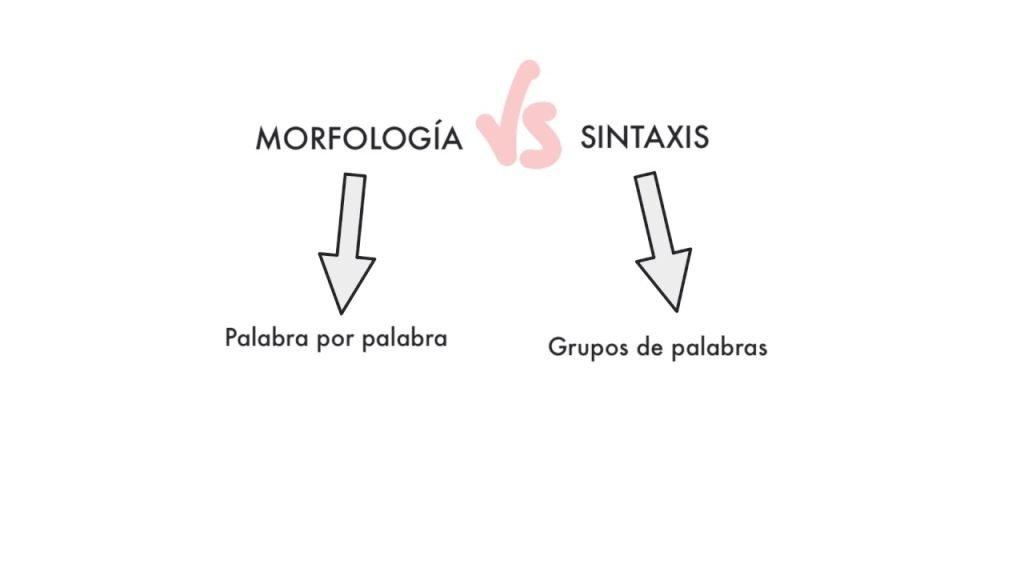
Syntax, on the other hand, zeroes in on the relationships between different elements within a sentence. It’s concerned with the combination of words and groups of words, and the larger structures (sentences) they create. It asks: "How do these words fit together? What role does each play? How does their arrangement affect meaning?" This makes syntax inherently combinatorial or syntagmatic, focusing on how units are sequenced and interconnected.
So, while Grammar provides the comprehensive framework, Syntax specifically focuses on the mechanics of sentence construction, making it an integral, foundational part of grammar itself. Think of it this way: all syntax is grammar, but not all grammar is syntax.
The Four Pillars of Gramática: A Quick Tour
To truly appreciate syntax, it helps to see where it fits into the larger linguistic landscape. Grammar is typically divided into four main branches, each focusing on a different aspect of language:
Morphology: The Building Blocks of Words
Morphology is the study of words themselves – their internal structure and how they're formed. It's about breaking words down into their smallest meaningful units (morphemes) and understanding how these units combine to create new words or modify existing ones.
- Example: Take the word "unbelievable." Morphologically, we can dissect it: "un-" (a prefix indicating negation), "believe" (the root word), and "-able" (a suffix indicating capability). Each part contributes to the word's overall meaning and grammatical function. This is how language builds a rich vocabulary from simpler components.
Sintaxis: Orchestrating Words into Meaningful Sentences
This is our main event. Syntax examines the relationship between words and how they function within a sentence. It's about the rules that govern word order, agreement, and the hierarchical structure that allows us to convey complex ideas. Without syntax, we'd have a jumble of words: "Book read I yesterday interesting a." With syntax, we get clarity: "Yesterday, I read an interesting book."
A key concept in syntax is the sintagma (syntactic group or phrase). These are groupings of words that function as a single unit, carrying a shared syntactic meaning, and are larger than a single word but smaller than a full clause.
- Example: In the sentence "The very tall boy quickly ran across the field," you can identify several sintagmas:
- "The very tall boy" (Noun Phrase, acting as the subject)
- "very tall" (Adjectival Phrase, modifying "boy")
- "quickly ran" (Verb Phrase, the predicate)
- "across the field" (Prepositional Phrase, telling us where he ran)
Understanding sintagmas helps us see how meaning is built in layers, with groups of words working together to fulfill specific roles within the sentence (e.g., subject, object, modifier). It's a powerful tool for crafting clear and impactful sentences.
Semantics: The Soul of Meaning
Semantics is the study of meaning in language. It explores how words, phrases, and sentences convey sense and reference. This branch delves into the literal meaning of words (lexical semantics) and how context influences interpretation (pragmatics).
- Example: The word "bank" can mean the side of a river or a financial institution. Semantics helps us understand how context clarifies which meaning is intended.
Phonetics: The Music of Language
Phonetics is concerned with the physical sounds of human speech. It studies how speech sounds are produced by the vocal organs, their acoustic properties, and how they are perceived by the listener.
- Example: The difference between the 'p' sound in "pat" (unaspirated in English) and the 'p' sound in "spot" (aspirated, with a puff of air). Phonetics categorizes and analyzes these subtle distinctions.
Why Gramática y Sintaxis Matter in Everyday Life
Understanding grammar and syntax isn't just an academic exercise; it's a fundamental skill that profoundly impacts your daily interactions, professional life, and ability to connect with the world around you.
- Clarity in Communication: Good grammar and syntax ensure that your message is conveyed precisely as intended. Ambiguity shrinks, and understanding blossoms.
- Avoiding Misunderstandings: Poor sentence structure can lead to confusion, requiring clarification and sometimes causing significant errors, especially in professional or critical contexts.
- Professionalism and Credibility: In almost any professional setting, clear, correct language signals competence, attention to detail, and respect for your audience. It builds trust.
- Enhanced Comprehension: When you grasp the underlying structure of language, you become a more astute reader and listener, capable of dissecting complex texts and arguments.
- Appreciation of Literature and Art: A deeper understanding of syntax allows you to appreciate the stylistic choices authors make, from poetic rhythm to the dramatic impact of a well-placed phrase.
- Better Problem-Solving: Language structures thought. A clear grasp of how language is built can, indirectly, foster more organized and logical thinking.
Decoding Sentence Structure: The Art of Sintaxis in Action
Syntax is the art of arranging words to create meaning. Let's break down some practical applications of syntactic principles:
Subjects, Verbs, Objects: The Core Relationship
At the most basic level, syntax dictates the relationship between the subject (who or what is performing the action), the verb (the action itself), and the object (who or what is receiving the action).
- English Example: "The dog chased the squirrel."
- Subject: "The dog"
- Verb: "chased"
- Object: "the squirrel"
The order here is crucial. "The squirrel chased the dog" conveys a very different meaning.
Modifiers and Clauses
Syntax also manages how we add detail. Modifiers (adjectives, adverbs, phrases) expand on the core meaning, while clauses (groups of words with a subject and verb) allow us to combine multiple ideas.
- Modifiers: "The energetic dog quickly chased the scampering squirrel up the oak tree."
- Clauses: "The dog, which was very energetic, quickly chased the squirrel that had been teasing him." (Independent clause + two dependent clauses).
Sentence Types: From Simple to Complex
Syntax empowers us to build sentences of varying complexity:
- Simple Sentence: One independent clause ("The cat slept.")
- Compound Sentence: Two or more independent clauses joined by a conjunction ("The cat slept, and the dog watched TV.")
- Complex Sentence: An independent clause and one or more dependent clauses ("While the cat slept, the dog watched TV.")
- Compound-Complex Sentence: Two or more independent clauses and one or more dependent clauses ("While the cat slept, the dog watched TV, and the parrot squawked loudly.")
Mastering these structures allows for sophisticated expression and helps avoid monotony in writing.
Active vs. Passive Voice: A Syntactic Choice
One common syntactic decision involves voice.
- Active Voice: The subject performs the action ("The student wrote the essay.") – generally clearer and more direct.
- Passive Voice: The subject receives the action ("The essay was written by the student.") – can be useful when the actor is unknown or less important, but often leads to wordiness.
Knowing when and how to use each is a crucial syntactic skill that can enhance your effective communication strategies.
Common Pitfalls: Spotting and Fixing Language Errors
Errors in language can stem from various sources, and distinguishing between them is the first step toward correction. Gramática y Sintaxis help us categorize and understand these mistakes.
Orthographic Errors: The Spelling Traps
Orthography deals with the rules of a writing system. An orthographic error is simply a misspelling, a deviation from the accepted way a word is written.
- Example (Spanish from ground truth): Writing "baliente" instead of "valiente."
- English Equivalent: Writing "recieve" instead of "receive," or "seperate" instead of "separate." These are often caught by spell checkers, but understanding the underlying rules (like "i before e, except after c") helps.
Knowing how to spell correctly is foundational. Fortunately, resources for identifying and correcting common writing mistakes are abundant.
Grammatical Errors: When Rules Break Down
These errors occur when words are combined incorrectly, violating the broader rules of grammar that govern agreement, tense, and form.
- Subject-Verb Agreement: "The dog run fast" instead of "The dog runs fast." (Lack of agreement in number).
- Tense Consistency: "She walked to the store, then buys some milk." (Inconsistent tenses).
- Pronoun Agreement: "Everyone should bring their own lunch" (informally accepted, but technically "his or her" is more grammatically precise as "everyone" is singular).
- Incorrect Gerund Usage (from ground truth, explained): The Spanish example "Hubo un incendio, muriendo cinco personas" translates literally to "There was a fire, dying five people." The gerund "muriendo" (dying) is incorrectly used to express an action that happened after the main event. In English, a similar error might be a dangling participle: "Running to catch the bus, my books fell out of my bag." (It sounds like the books were running, not the speaker). The corrected form would be: "As I ran to catch the bus, my books fell out of my bag." This shows an improper connection between clauses or actions.
Grammatical errors fundamentally hinder clarity and can make your writing sound unpolished. For those learning a new language, understanding grammatical rules like mastering Spanish verb conjugations becomes absolutely vital.
Syntactic Errors: The Disjointed Sentence
Syntactic errors occur specifically when the relationship between words or word groups is inadequate, leading to awkward, ambiguous, or incorrect sentence structure. While grammatical errors often relate to the form of words, syntactic errors relate to their arrangement and connection.
- Lack of Concordance/Agreement (from ground truth, adapted): The Spanish example "Lucía compra cuatro manzana" (Lucía buys four apple) instead of "Lucía compra cuatro manzanas" (Lucía buys four apples) highlights a lack of number agreement between the numeral "cuatro" (four) and the noun "manzana" (apple).
- English Equivalent: "Many student is here" instead of "Many student are here." Or, "The boys plays video games" instead of "The boys play video games." This is a violation of subject-verb agreement in number, which is a syntactic issue concerning the relationship between subject and verb.
- Parallelism Failures: "She loves to hike, swimming, and cycling." (The verbs are not in parallel form.) Correct: "She loves hiking, swimming, and cycling."
- Misplaced Modifiers: "He saw a dog with one eye running down the street." (Was the dog running with one eye, or did he see a one-eyed dog running?) Correct: "He saw a one-eyed dog running down the street."
- Run-on Sentences/Comma Splices: "I went to the store I bought milk." (Run-on) or "I went to the store, I bought milk." (Comma splice). These are fundamental failures in sentence boundary and structure.
Syntactic errors are particularly tricky because they can make a sentence technically "grammatically correct" in terms of word forms, yet still confusing or awkward due to poor arrangement.
Beyond the Basics: Nuances and Advanced Concepts
The journey through grammar and syntax doesn't end with avoiding errors. It extends into the subtleties of language, allowing for greater artistry and precision.
- Stylistics and Rhetorical Devices: Authors manipulate syntax to achieve specific effects. Inverting word order for emphasis, using long, flowing sentences to create a sense of grandeur, or short, clipped sentences for urgency—these are conscious syntactic choices.
- Context Shapes Meaning: While semantics deals with word meaning, syntax helps show how the structure of a sentence can completely alter its interpretation based on surrounding context.
- Language Evolution: Grammatical and syntactic rules aren't static; they evolve over time. What was considered correct centuries ago might be archaic today, reflecting the dynamic nature of human communication.
Your Blueprint for Better Language Skills
Understanding Gramática y Sintaxis isn't about memorizing endless rules; it's about developing an intuitive feel for how language works. Here's how you can cultivate that understanding and significantly improve your writing skills.
- Read Widely and Actively: Immerse yourself in well-written texts—books, reputable articles, essays. Pay attention not just to what is being said, but how it's structured. Notice sentence patterns, the flow of ideas, and the choice of words.
- Practice Writing Consistently: There's no substitute for putting pen to paper (or fingers to keyboard). Start with simple exercises, like rewriting confusing sentences, then progress to longer pieces. The more you write, the more you'll internalize effective syntactic structures.
- Seek and Embrace Feedback: Ask trusted friends, colleagues, or mentors to review your writing. A fresh pair of eyes can spot errors or awkward phrasing you might overlook. Be open to constructive criticism; it's a powerful learning tool.
- Use Grammar Checkers Wisely: Tools like Grammarly or built-in spell/grammar checks can be helpful, but don't rely on them exclusively. Understand why a suggestion is made, rather than just blindly accepting it. They are aids, not replacements for comprehension.
- Study a Second Language: Learning another language, even at a basic level, often illuminates the grammatical and syntactic structures of your native tongue in surprising ways. You become more aware of concepts like word order, case, and agreement when they differ from what you're used to.
- Actively Build Your Vocabulary: A richer vocabulary allows you more precision in your expressions. Focusing on developing your vocabulary empowers you to choose the exact word to fit your intended meaning and avoid redundant phrasing, which in turn improves syntactic flow.
- Review the Basics Regularly: Sometimes a quick refresher on parts of speech, sentence types, or common punctuation rules can make a world of difference. Don't be afraid to revisit fundamental concepts.
Final Thoughts: Embracing the Language Journey
Gramática y Sintaxis are not rigid, punitive systems designed to catch you out. Instead, they are fascinating frameworks that empower us to decode, construct, and appreciate the incredible complexity and beauty of human language. They are the keys to unlocking clear thought, persuasive argument, and profound connection.
Your journey to mastering these elements is an ongoing one, filled with continuous learning and discovery. Embrace the process, stay curious, and you'll find that your ability to communicate with precision, elegance, and impact will grow exponentially. Language is a living thing; by understanding its internal workings, you not only speak it, but you truly master it.